
Razor Clamming 101: Do it for the chowder!
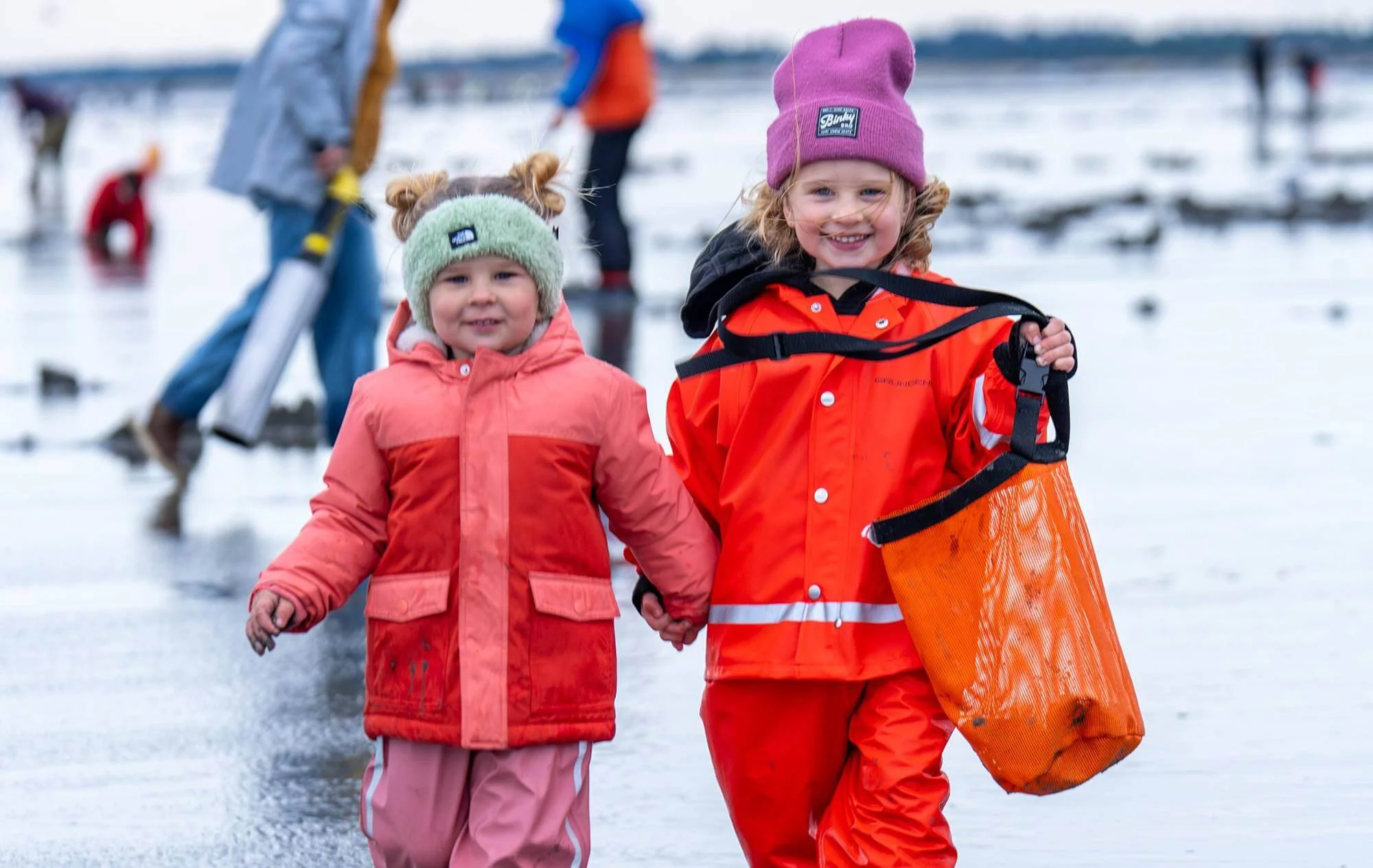
There’s a moment, usually right when the wind cuts through your jacket and you start questioning your life choices, when razor clamming finally makes sense. You’re standing on a wide, empty stretch of beach near Westport, staring at what looks like… nothing. And then, there it is: a little dimple in the sand. A “show.” Suddenly, you’re not cold anymore; you’re hunting.
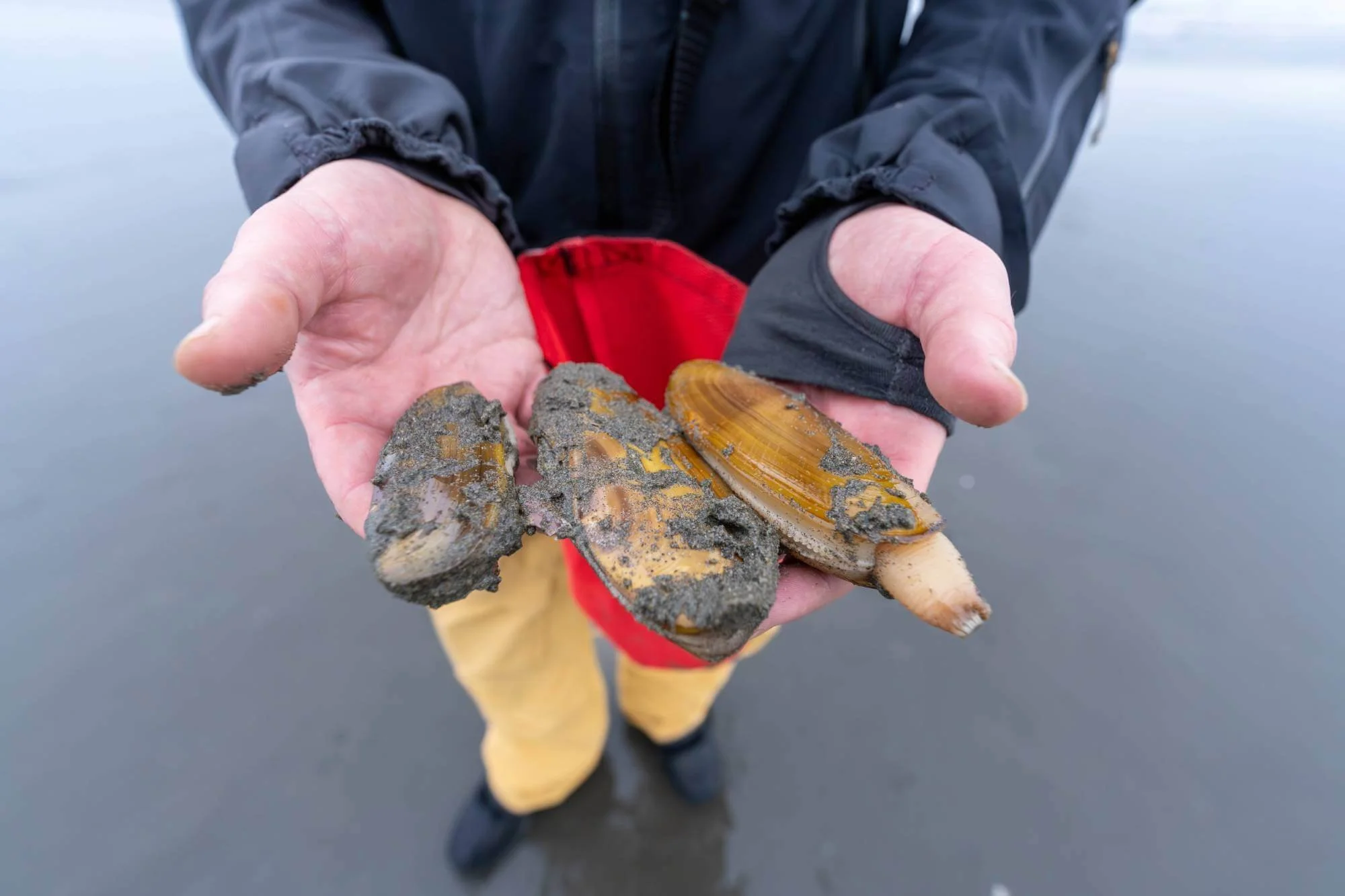
Hunting for clams with a mild, slightly sweet, delicate briny flavor and a tender, firm texture that’s less chewy than other clams. They can be breaded and pan-fried, sautéed in garlic butter, steamed, grilled, or used in chowder. Check out this video from the WDFW on how to clean and cook them.
What Razor Clamming Actually Is (and Why It’s Addictive)
Razor clams burrow just beneath the surface of the sand along the Washington coast. You don’t dig randomly. You look for signs; those little keyhole-shaped dimples or donut holes in the sand, and then you move fast.
Can’t see any dimples? Try stomping or “tamping” the sand, forcing them to “spit,” which creates the aforementioned “dimple.” This works best on dry or damp sand, creating a vibration, which causes the clam to move and reveal itself.
It’s part treasure hunt, part excuse to stand on a beach at sunset holding a shovel like you mean business.
And yes, you will get sandy. There is no version of this where you stay clean. Accept it early.
Where to Go in Westport
Westport sits right next to some of the most productive razor clamming beaches on the Washington coast. The one the WDFW lists most often near Westport is Twin Harbors. The best spots are located along the stretch of beach from the south jetty at Grays Harbor down to Willapa Bay. According to the WDFW, the most popular access points for digging include Grayland Beach Road, Cranberry Beach Road, and Warrenton Cannery Road.
Where you can clam depends on state openings, so always check the WDFW website before heading out. They don’t open beaches randomly; it’s based on tides and toxin levels.
Timing Is Everything
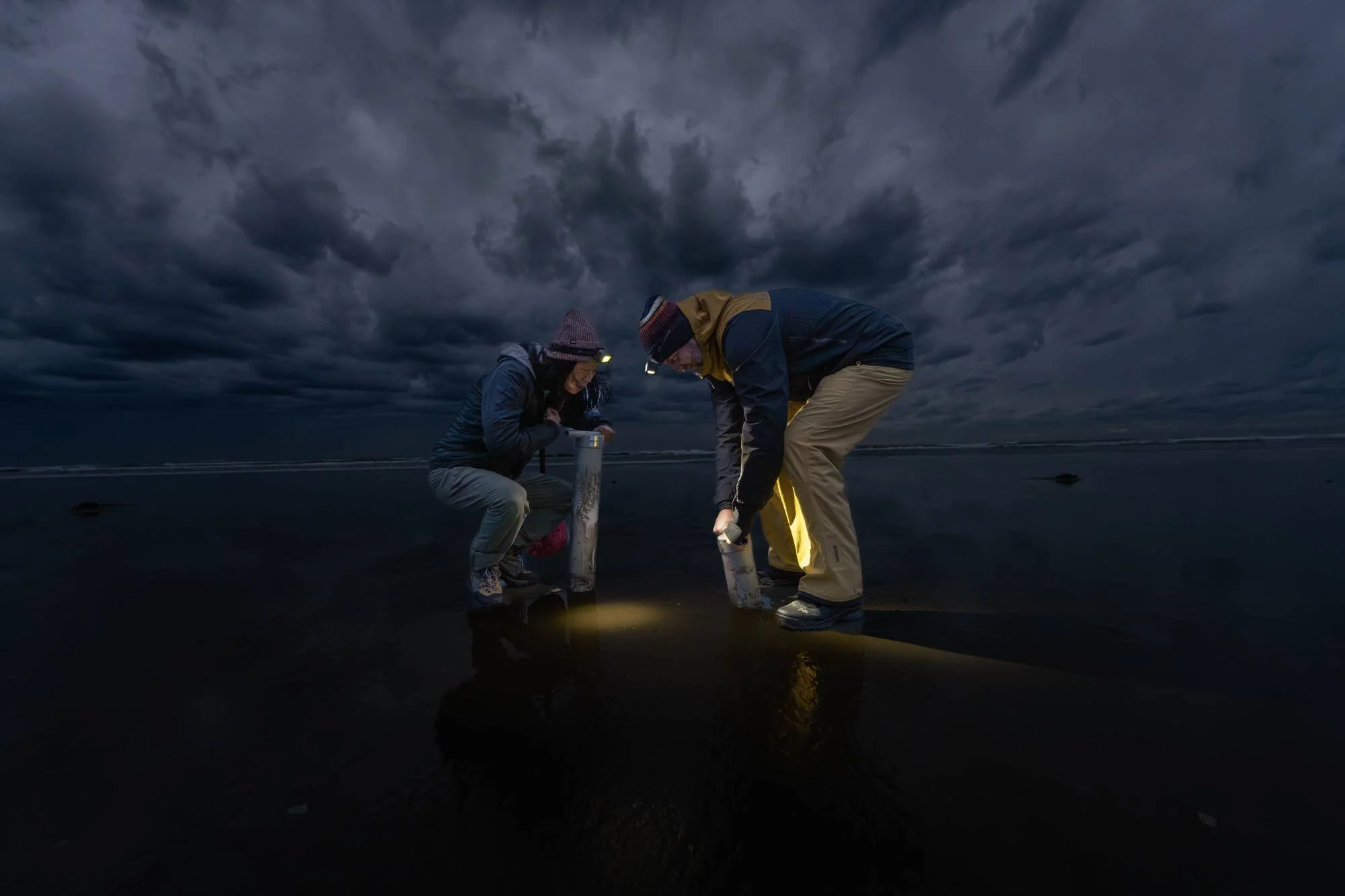
Clamming revolves around low tide, especially evening and early morning digs.
Aim to be on the beach 1–2 hours before the lowest tide
The best digs often happen at night or dusk (bring a headlamp—it’s part of the vibe)
Night clamming feels a little like a secret club. Just a line of headlamps bobbing in the dark while people quietly lose their minds over sand dimples.
Gear: Clam Gun vs. Shovel
You’ve got two main approaches, and people tend to get weirdly loyal about them.
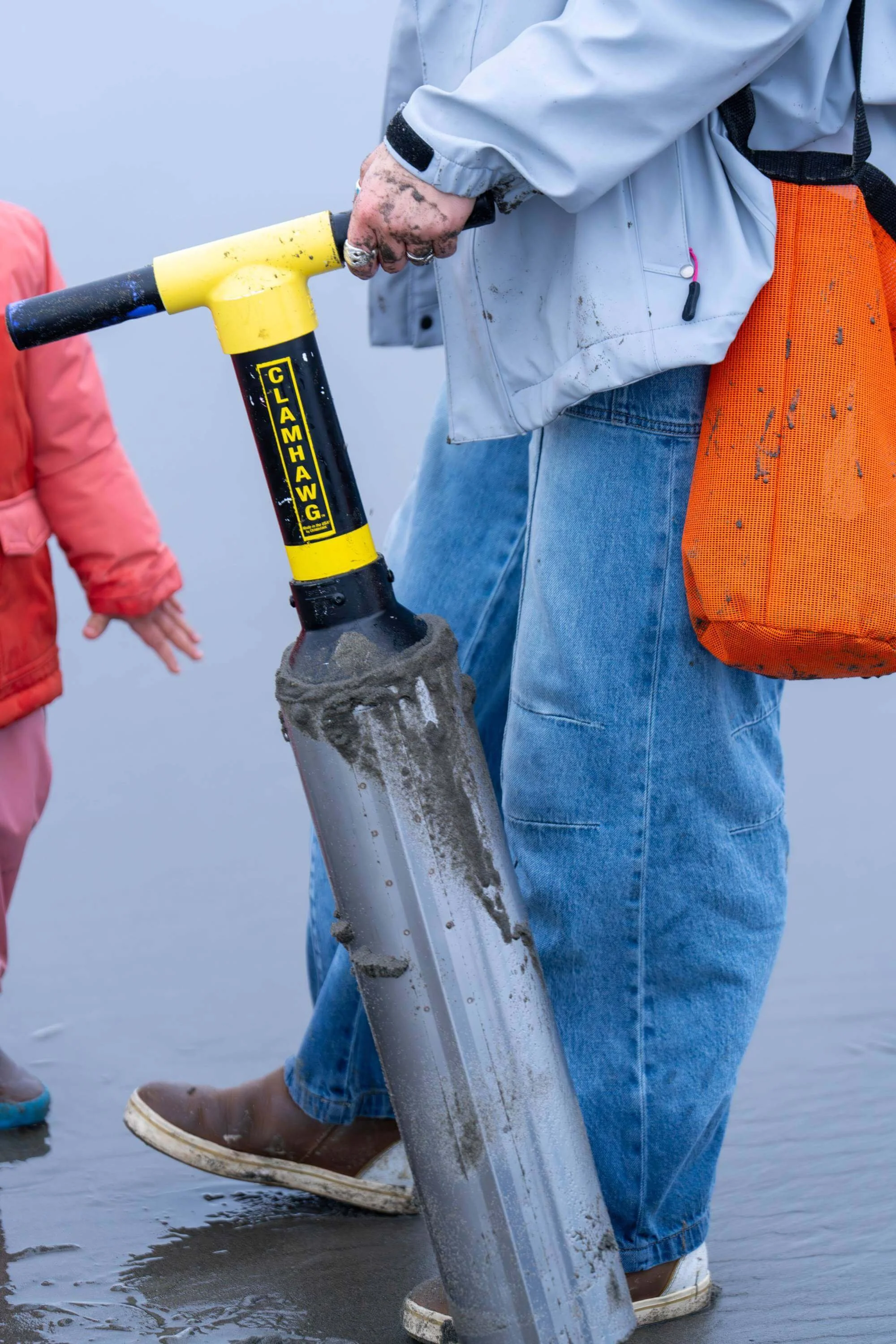
Clam Gun (the “pro” move)
A clam gun is a long tube you push into the sand and pull up, bringing a core of sand—and hopefully the clam—with it.
Pros:
Cleaner holes
Less chance of slicing the clam
Faster once you get the hang of it
Cons:
Takes some upper body strength
Learning curve is real for your first few digs
If you’re looking to buy a clam gun in Westport, you can find a great selection at Englund Marine and Industrial Supply on Wilson Avenue. They also have very reasonably priced plastic versions at the Shop ’n Kart. Not quite as effective, but cost-effective.
Shovel (the “I grew up doing this” move)
You dig next to the show and scoop fast before the clam dives.
Pros:
More accessible for beginners
Surprisingly effective
Feels a little more chaotic (in a good way)
Cons:
Easier to damage clams
You will get wetter and sandier
There’s no wrong choice. We’ve seen kids out-dig adults using nothing but a small shovel and sheer determination.
How to Actually Catch a Razor Clam
Here’s the part people overthink.
1. Spot the show: Look for a dimple, keyhole, or small depression in the sand
2. Move quickly: Clams can dig down fast once disturbed
3. Dig or gun just off-center: Not directly on top of the show
4. Get your hand in the ensuing sand pile: Feel for it and grab it
5. Hold on: They’re stronger than they look
Your limit is typically 15 clams per person, and you need to keep the first 15 you dig (no swapping out for bigger or unbroken ones later).
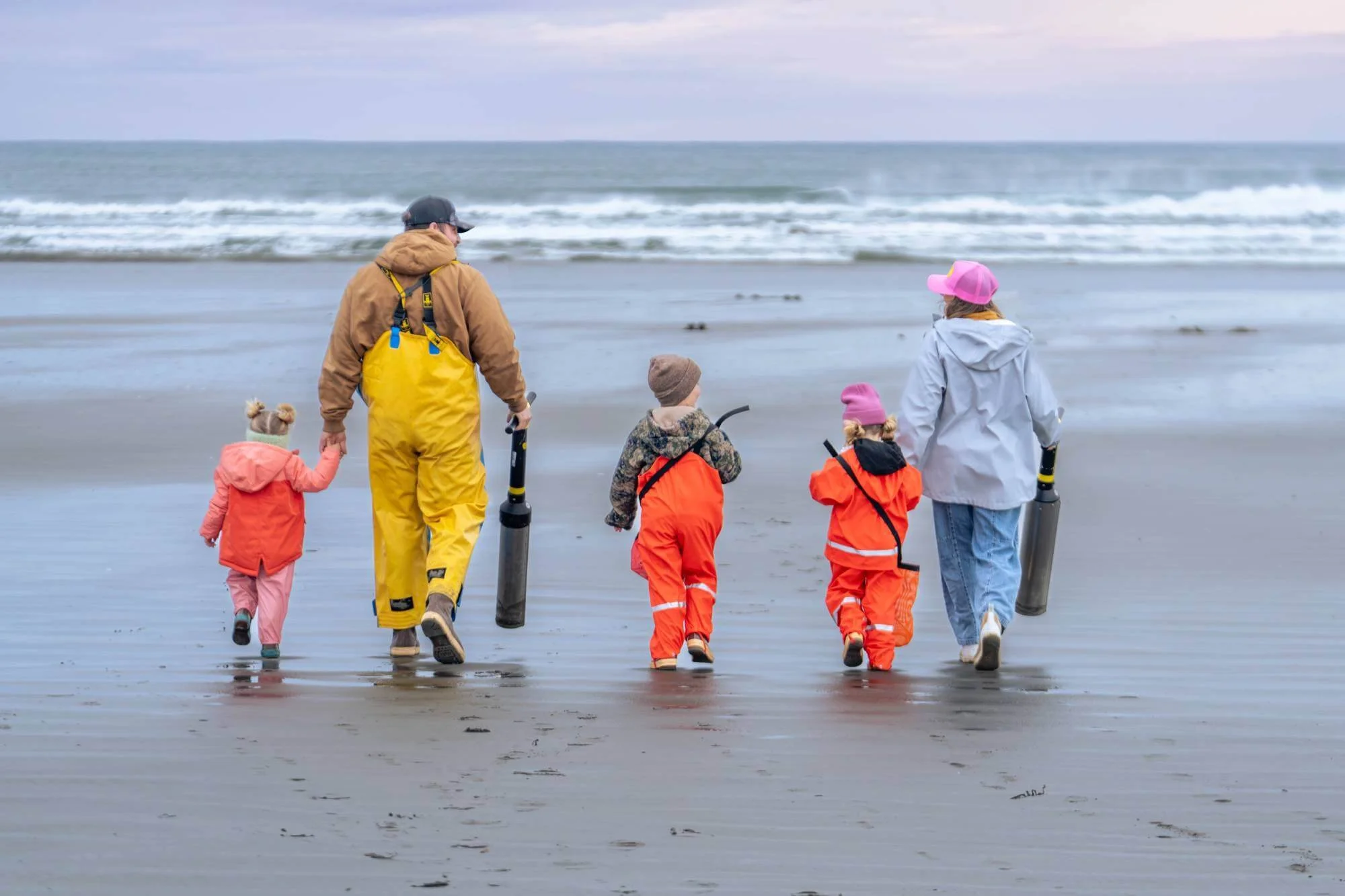
Clamming with Kids (Highly Recommended)
This might be one of the best family activities on the coast, mostly because it doesn’t feel like an “activity.” It feels like running around on the beach with a purpose.
A few things that help:
Give kids their own tools (even small ones) and clamming bags
Dress them in brightly-colored clothing so they don’t blend in with the ocean
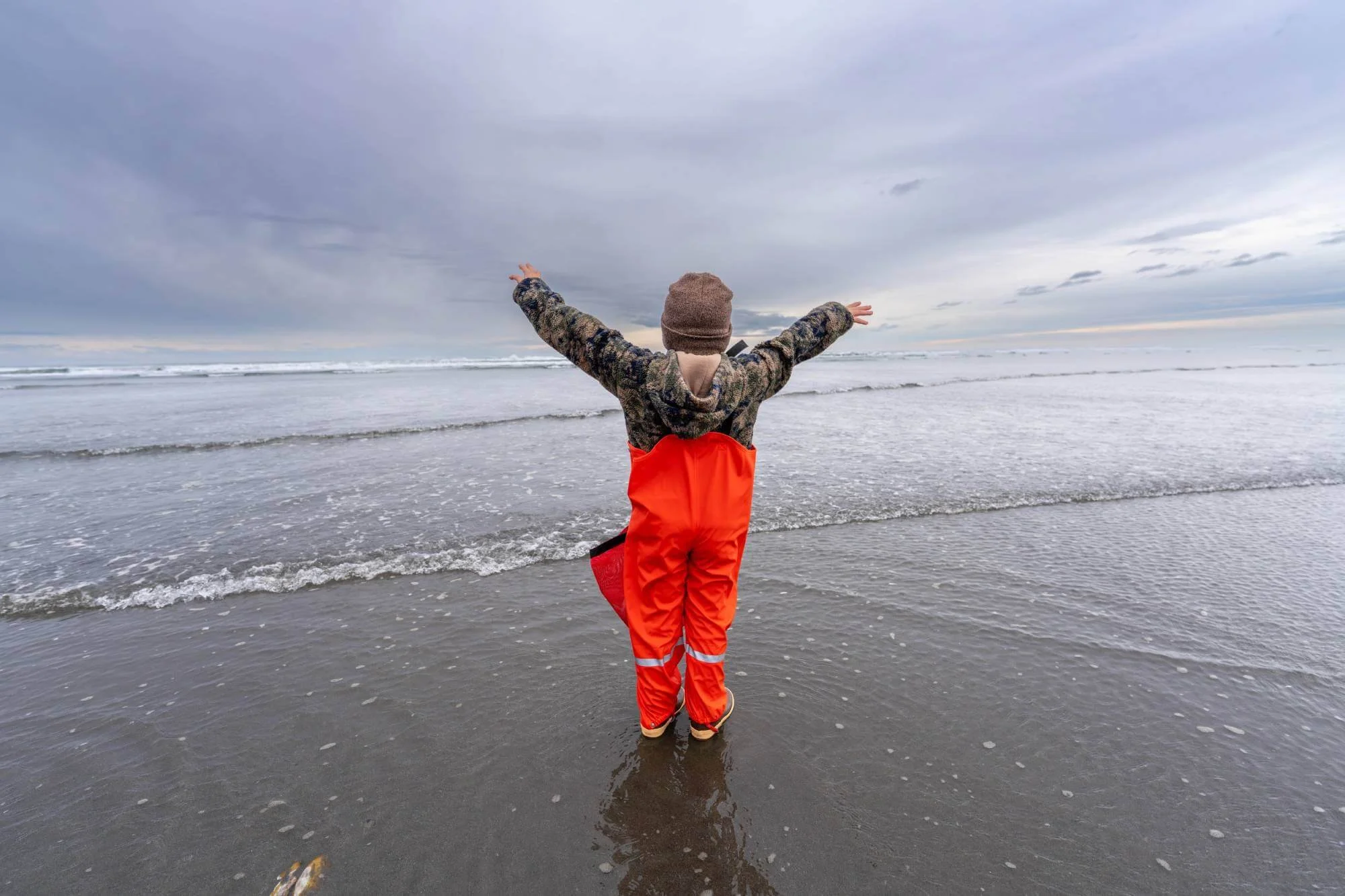
Let them claim their own shows
Expect chaos and celebrate it
Bring extra gloves and dry clothes
Kids are weirdly good at spotting shows. Lower to the ground, closer to the action, less distracted by overthinking.
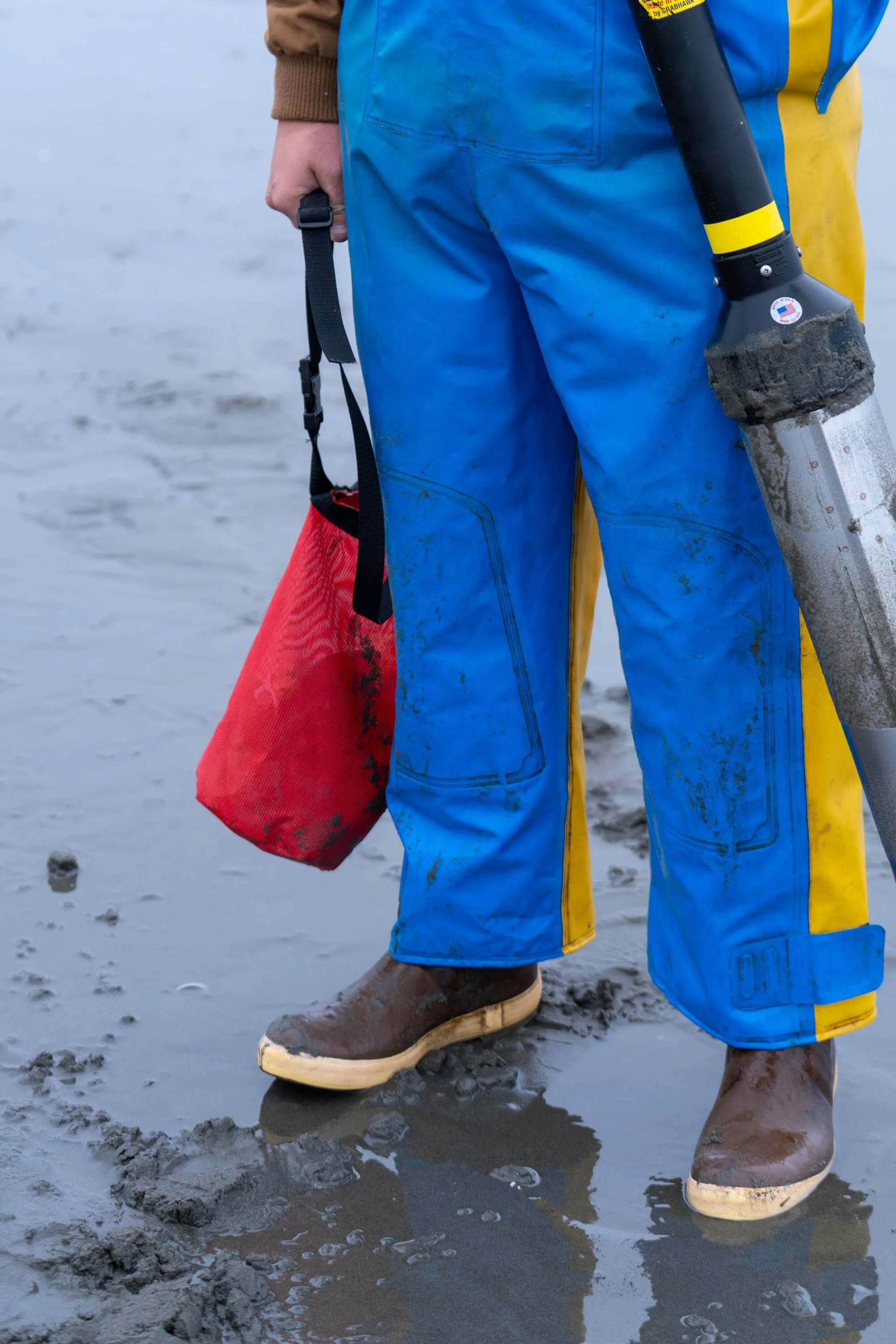
What to Wear for All
Waterproof boots (non-negotiable)
Waterproof pants or overalls
Layers you don’t mind getting sandy
Headlamp or flashlight for early morning or evening digs
Gloves if you don’t love cold, wet sand
You don’t need to look rugged, but you will end up looking rugged.
A Few Rules Worth Knowing
You need a Washington shellfish license - you can purchase one at Shop ’n Kart on Montesano Street in Westport, but if it’s an early morning dig, you’ll have to get it the day before. Licenses are also available for purchase online. Every person in your party needs their own license, even the kids!
Only dig during approved openings, listed at the WDFW website.
Fill in your holes once you’re done (seriously, it’s a safety thing)
Keep all clams you dig, even if they break
The Good Part at the End of the Dig
The walk back to your car, bucket in hand, cheeks cold, a little tired, a little proud…that’s the good stuff. You didn’t just have fun shoving a clam gun deep into the sand—you CAUGHT YOUR DINNER. You hunted and gathered, just like in olden times!
And now you get to enjoy the sweet rewards of your hunt, sautéed in butter and garlic, like the viking you are.
Here are some of the last 2026 WDFW dates for Twin Harbors:
April 2026
April 19, Sunday, 8:26 a.m.; -1.8 feet
April 20, Monday, 9:14 a.m.; -1.7 feet
April 21, Tuesday, 10:07 a.m.; -1.3 feet
April 22, Wednesday, 11:06 a.m.; -0.8 feet (digging extended until 2 p.m.)
April 23, Thursday, 12:11 p.m.; -0.2 feet (digging extended until 2 p.m.)
April 30, Thursday, 6:26 a.m.; -0.3 feet
May 2026
May 1, Friday, 7:01 a.m.; -0.7 feet
May 2, Saturday, 7:35 a.m.; -0.8 feet
May 3, Sunday, 8:08 a.m.; -0.8 feet
May 4, Monday, 8:43 a.m.; -0.7 feet
May 5, Tuesday, 9:21 a.m.; -0.4 feet
May 6, Wednesday, 10:03 a.m.; -0.1 feet
Plan your razor clamming adventure! Visit our accommodations page to find just the right spot for your stay. Look for the fishing pole emoji next to hotels and motels with fish cleaning stations.